2003: Invasion and Occupation
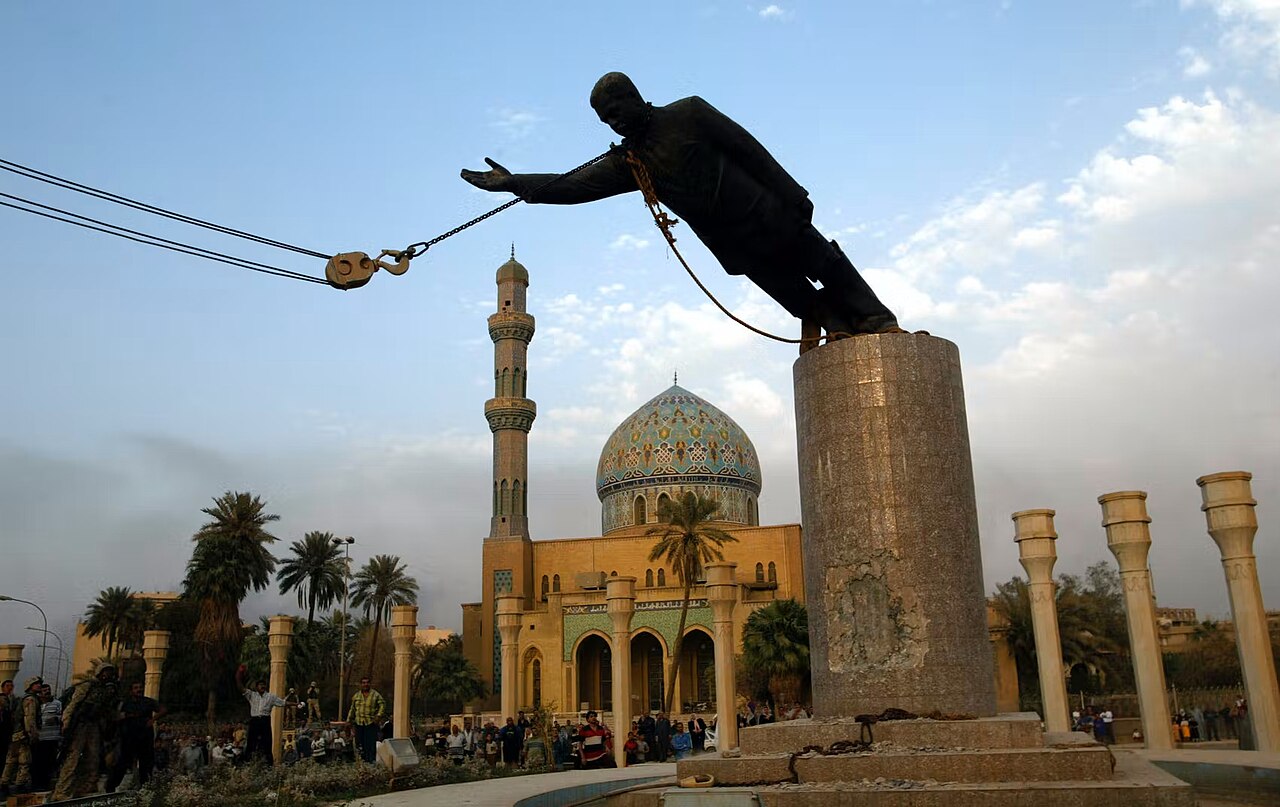
March: the invasion
On March 20, 2003, coalition forces began the invasion of Iraq. The Army's 3rd Infantry Division and the 1st Marine Expeditionary Force drove north from Kuwait. In the south, Marines of Task Force Tarawa fought the Battle of Nasiriyah from March 23 to April 2, one of the hardest fights of the invasion. See Nasiriyah.
April: Baghdad
U.S. forces seized Baghdad International Airport on April 3. Armored columns of the 3rd Infantry Division's 2nd Brigade made two "Thunder Runs" into the city on April 5 and April 7. On April 9 the statue of Saddam Hussein in Firdos Square came down. See Baghdad and the Thunder Runs.
May: "major combat operations" end
On May 1, President Bush declared the end of major combat operations. In May the Coalition Provisional Authority, led by L. Paul Bremer, began governing Iraq. Its early orders removed senior Baath Party members from public positions and dissolved the Iraqi army, decisions that remain debated.
Summer and fall: the insurgency grows
Attacks on coalition forces increased through the summer. On August 19 a truck bomb destroyed the United Nations headquarters in Baghdad. Roadside bombs, which became known by their military name, improvised explosive devices, began to define the experience of soldiers on convoys and patrols.
December: capture of Saddam Hussein
On December 13, 2003, U.S. forces captured Saddam Hussein near Tikrit.
For veterans of 2003
Veterans who served in Iraq between March 19 and May 1, 2003, served in the Liberation of Iraq campaign; from May 2 onward, in Transition of Iraq.